
Technology · MuteSkin®
A new class of wind turbine noise reduction technology
Overview
Less noise. More power. Same simplicity.
How it works
A better way to reduce noise at the source
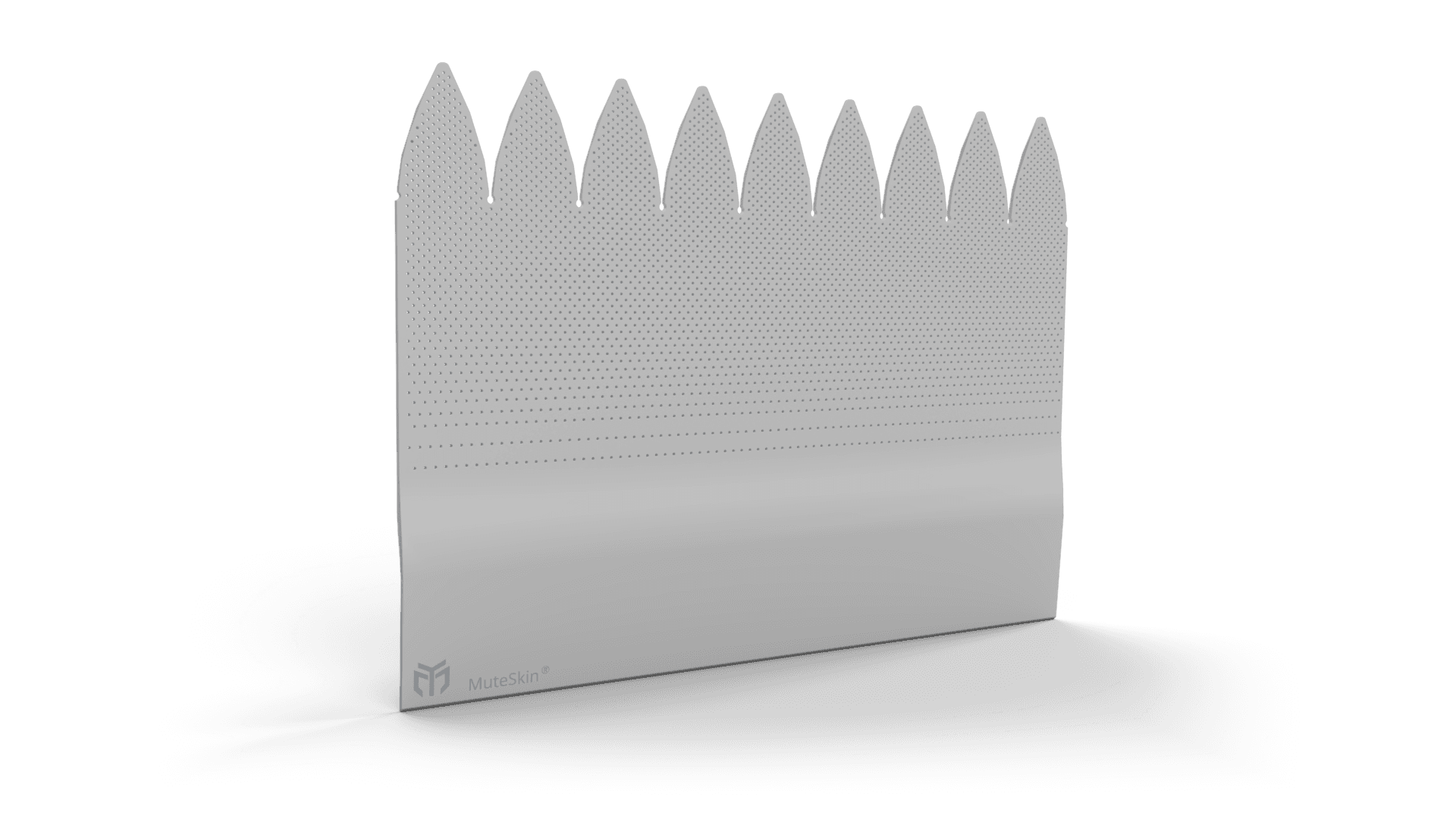
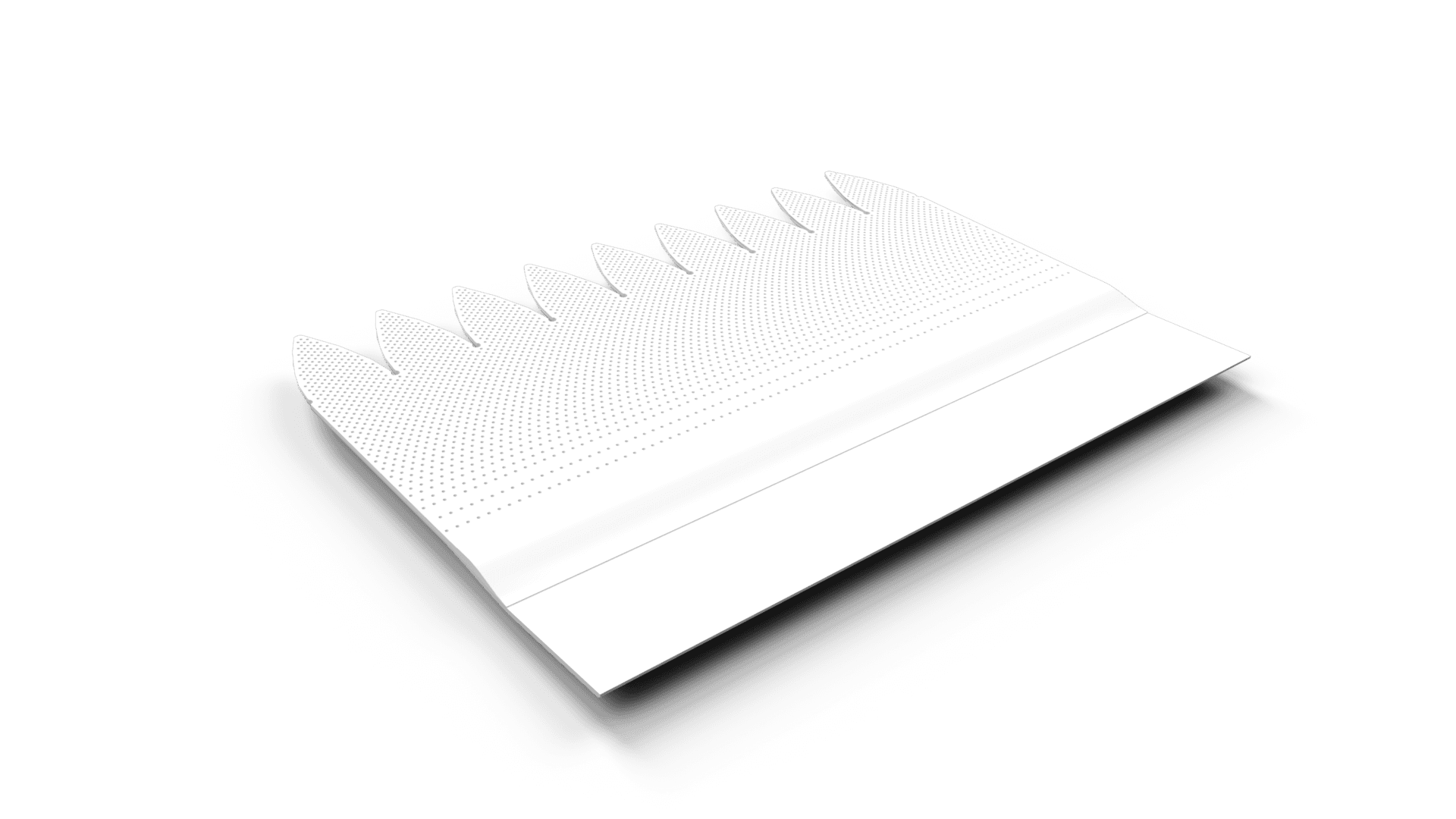
MuteSkin® uses a patented permeable structure to reduce trailing-edge noise, typically the dominant noise source on wind turbines. The permeability enables pressure communication between the flow along the pressure and suction sides of the blade. This lowers the pressure jump at the trailing edge, which significantly reduces the noise radiated.
The permeable structure is combined with design elements that provide the scattering effect of serrations. MuteSkin® achieves a superior overall noise reduction with this combined approach. In addition, it has a minimal impact on blade aerodynamics and loads to ensure turbine performance is unaffected.
performance
New horizons for noise reduction
Conference paper
Turbulent boundary layer trailing-edge noise reduction with permeable blade extensions at full-scale conditions
Hartog et al. · International Conferences on Wind Turbine Noise, 2025 · Copenhagen
Commercial Benefits
Unlock the potential of your turbines
Noise is a rapidly growing, major constraint for onshore wind. Reducing noise with MuteSkin® helps you unlock the potential of your turbines:
More AEP from new and existing turbines
More capacity per site through repowering and denser layouts
Unlocking sites previously closed off by noise limits
Faster, lower-risk permitting for new projects
Improved community acceptance near wind farms
Implementation
Ready to deploy, easy to maintain
Installation
Installation with standard methods for rotor blade add-ons such as serrations, both on new turbines and as retrofit to ones in service
Operation
Passive operation, minimal aerodynamic impact, and no additional maintenance requirements
Qualification
Durable materials qualified for long-life blade add-on applications; developed & produced in accordance with ISO 9001 and APQP4Wind
Integration
Applicable across turbine platforms and rotor classes, with design adaptation to blade geometry and operating envelope
Work with us